


Where to See Elk in Arkansas

1 /
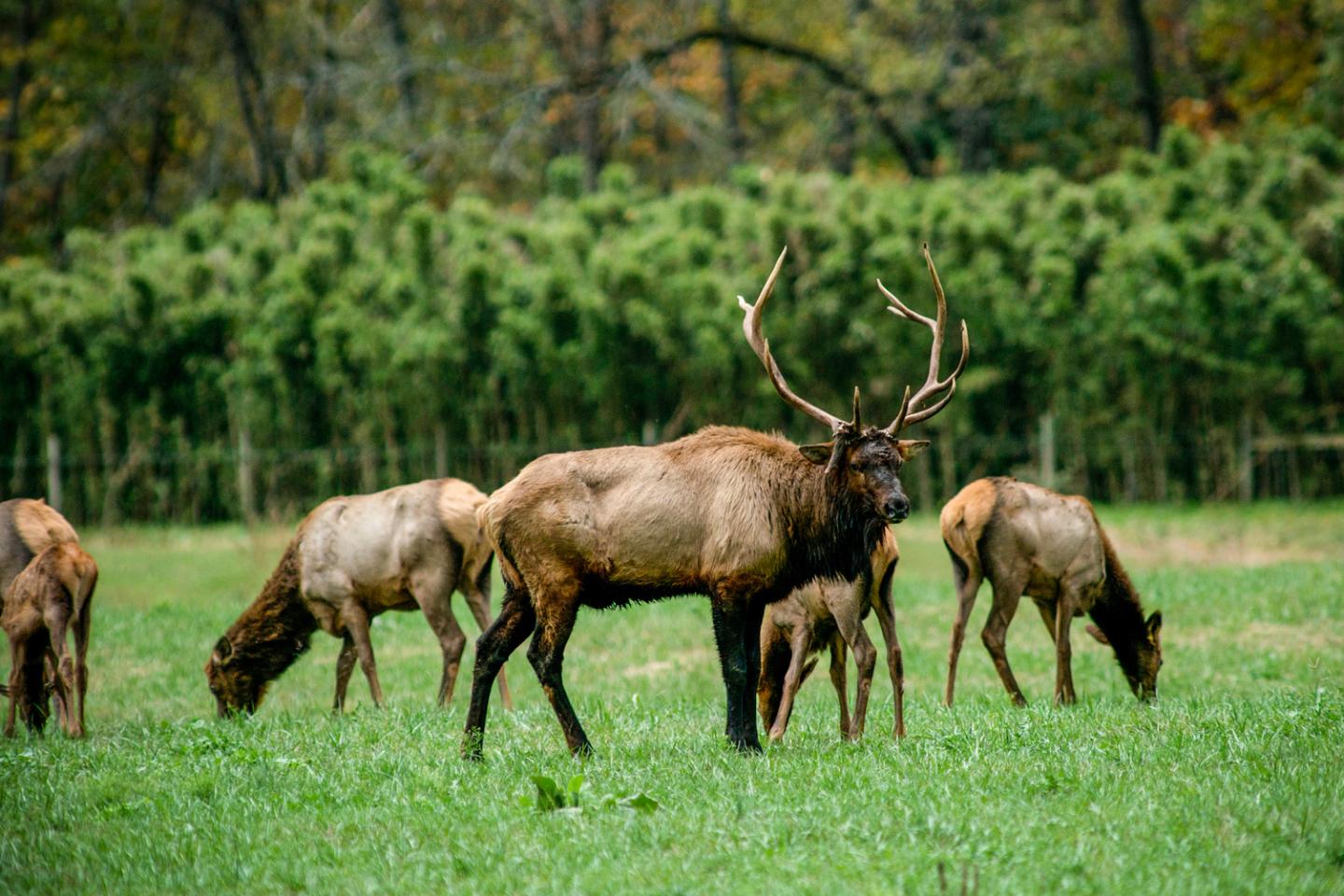
As the fog lifts in Boxley Valley and the morning sun warms the dew on the grass, elk move from the mottled shade at the edge of the forest into the open pasture to graze.
Before long, cars pull over on the side of the road, and their occupants stand at the edge of the field, pulling out binoculars, cameras and tripods to view and photograph the wild herd.
Elk range through more than 315,000 acres in Arkansas in the northwest part of the state along the Buffalo National River in Newton and Searcy counties and in portions of southern Boone and Carroll counties. The large beasts prefer open areas for grazing with nearby wooded areas for resting.
The Buffalo National River became the nation's first national river in 1972, and the National Park Service has managed its 135 free-flowing miles ever since. It's known for hiking, floating, camping and wildlife watching.
Viewing Elk in Boxley Valley
One of the most popular places to view elk in their natural habitat is along AR 43 and AR 21 in Boxley Valley, an unincorporated community and historic valley protected within the upper Buffalo National River boundaries.
Designated pullouts along those roads make it easy for people to pull over, park the car and safely view elk from the edge of the road along a fence row. On weekends, visitors need to arrive early to secure a spot, particularly in the fall when the elk are bugling and the leaves are changing color.
Boxley is located along the Ozark Highlands Scenic Byway, a 35-mile section of Highway 21 that passes through the Ozark National Forest, beginning near Clarksville and ending at the Buffalo National River.
More Elk Viewing Spots Along the Buffalo River
Additionally, elk can often be seen near the Erbie campground on the south side of the Buffalo National River or in fields on the north side. Another opportunity for elk viewing is along roads leading east and west from Pruitt Bridge in Pruitt. In Carver, look for elk in the fields near the Carver Bridge and in the Gene Rush Wildlife Management Area just south of the river.
Bearcat Hollow Wildlife Management Area and the Richland Valley addition to Gene Rush WMA have great public access and habitat for elk viewing.
Best Times to View Elk
Dawn and dusk are when the elk are most active any time of year. September through October is mating season with large bull elk putting on a show in open fields as they bugle, spar, and herd females.
About 76 percent of calves are born in early June. At birth, calves weigh about 35 pounds. By the start of its first winter, the elk may weigh five times as much as when it was born. By the time they reach adulthood, cows weigh up to 500 pounds, and bulls may reach more than 800 pounds, stand five feet at the shoulder and measure eight feet from nose to rump. Each year, bulls shed their antlers and it takes about 180 days for them to grow a new rack.
Elk Safety and Etiquette
No matter where or when you go to view elk, remember elk are wild animals that are unpredictable and very strong. Even the herds in Boxley Valley that are used to people gazing at them from the fence row are still wild. Also, that area is private property, so don’t walk into that field.
In remote wildlife management areas, keep your distance from animals and be aware of open hunting seasons.
History of Arkansas' Elk Herd
Although elk are often thought of as a western animal, the eastern elk was a native of Arkansas. However, it disappeared from the state’s forests sometime around 1840 and is now considered extinct.
The U.S. Forest Service introduced 11 Rocky Mountain elk in the Black Mountain Refuge of Franklin County in 1933. Although the herd did well for a number of years, it eventually disappeared likely due to illegal hunting, natural mortality and loss of suitable habitat. Between 1981 and 1985, 112 Rocky Mountain elk were again stocked. This time they were placed near the Buffalo National River in Newton County.
The 112 elk have grown to about 500 elk. The animals are referred to as the Hilary Jones Elk Herd, after former Game and Fish Commissioner Hilary Jones. Jones, along with local citizens of Newton County were instrumental in establishing the elk herd.
Elk Education Centers
While you’re in Boxley Valley, stop into the nearby Ponca Elk Education Center, where staff can provide daily updates on what the elk are doing. It’s one of two centers that interpret the elk and their habitat.
Operated by the AGFC’s education division, the interpretive center offers free admission. It features an exhibit room with full-body mounts of elk in natural settings, as well as an Arkansas black bear. Hands-on displays include hides, skulls and other artifacts, a geology display, interactive computer quizzes, and a birding window. Groups are welcome to schedule use of the facility for customized programs.
Visitors can shop for educational and fun souvenirs, books, videos, shirts, and even buy a hunting and fishing license at the center, which also has rustic log rockers and benches on its wrap-around deck overlooking Pond Creek, picnic tables, and a covered pavilion.
Another source of information is at the Hilary Jones Wildlife Museum and Elk Information Center in Jasper, about 15 miles away. Learn more about elk and other wildlife through exhibits and video presentations. Exhibits include elk mounts, three freshwater fish aquariums, and touch table of furs, feathers and bones.
The gift shop offers hand-painted agar nightlights, carved wooden toys, wildlife prints, note cards, T-shirts, caps, jewelry made from elk antlers, coffee cups and more. Admission is free, and the center is located on Scenic Byway 7.
Where to Stay in Elk Country
Cabins, tent campsites, RV campgrounds and lodges for romantic getaways, family gatherings and friend groups offer mountaintop views, forest escapes or riverside respites in Ponca, Jasper and the surrounding countryside. Some lodging options, such as Buffalo Outdoor Center and Lost Valley Canoeing and Lodging, also offer canoe and kayak rentals for the river. Camping options include the Ozark Campground situated near the impressive bluffs of the Buffalo National River. For an immersive experience, primitive camping at Gene Rush Wildlife Management Area puts you within prime elk habitat, where you’ll hear them all around you. In the twilight, it’s a powerful sound.


