


Drive the True Grit Trail, Dardanelle to Fort Smith

1 /
Drive Ark. 22 between Dardanelle and Fort Smith, and you're on the True Grit Trail, the same stretch of Wild West country Arkansas author Charles Portis conjured for fictional Mattie Ross in his bestselling 1968 novel, "True Grit." The road follows the path Ross might have ridden, through the same towns and territory where real outlaws, marshals and one legendary judge once made history.
The Story Behind the Trail
In the novel, Ross, a 14-year-old girl from Dardanelle, hires Rooster Cogburn, a U.S. Deputy Marshal, to track down her father’s killer and take him to Fort Smith to hang for his crime under Judge Isaac Parker. John Wayne played Cogburn in the 1969 film and won his only Oscar for it. Other cast members included Robert Duvall, Dennis Hopper and Arkansan Glen Campbell.
Oscar-winning filmmakers Joel and Ethan Coen remade the film in 2010, with Jeff Bridges as Cogburn, joined by Matt Damon and Josh Brolin. The story is set in Fort Smith and the Indian Territory of eastern Oklahoma in the late 1870s, though both films were shot in Colorado and New Mexico.
Since the 1940s, Wild West stories of Fort Smith have shown up in books and movies such as “True Grit,” “Rooster Cogburn” and “Hang’ em High.” But the real history is even better than Hollywood and a big draw for visitors.
Key Stops Along the Route
State-designated signage along Ark. 22 between Dardanelle and Fort Smith marks the 70-plus-mile route as the True Grit Trail.
Ross would have spent days covering this ground on horseback. By car, the same stretch takes a couple of hours. To make the most of it, though, take it at a slower pace, enjoying the rural scenery and good eats found along the way. Small town gems and surprises are waiting.
Mount Nebo State Park in Dardanelle makes a great starting point with cabins, campsites, more than 30 miles of hiking and mountain biking trails, and great views. From Mount Nebo, take Ark. 155 down the mountain and head north on Ark. 22.
If you’re hitting the True Grit Trail from Interstate 40, take Exit 81, following it west through Russellville to Ark. 7. Then turn north on Ark. 22. Look for Dardanelle Rock, a major landmark along the Arkansas River since the days of early exploration.
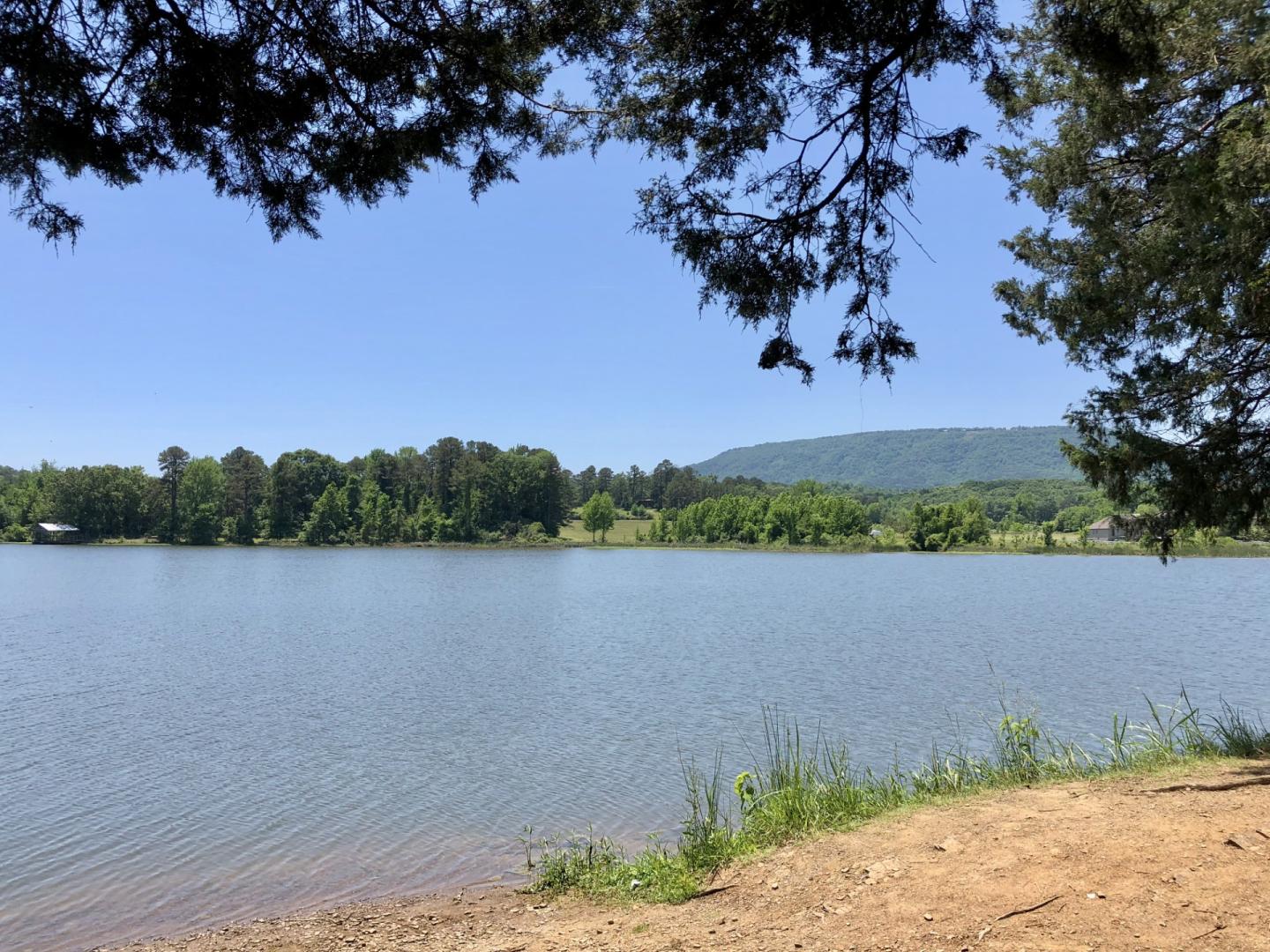
Continuing on Ark. 22, you’ll cross Lake Dardanelle more than once. This 34,300-acre reservoir is popular with anglers and home to Lake Dardanelle State Park. If you like to fish, look for additional creeks and recreational areas with fishing access along the way, including Jones Creek, Delaware Creek, and Shoal Bay Recreation Area.
Between Midway and Subiaco, consider taking a short side trip south on St. Louis Valley Road to Prestonrose Farm and Brewing Co., a small craft brewery with a farm-to-table restaurant and mercantile. (Open evenings Thursday-Saturday with afternoon hours on Sundays). As you head into the town of Subiaco, you’ll see pastures full of Angus sires. Another great side trip is a visit to Subiaco Abbey. Founded in 1878, it is a working Benedictine Monastery and all-boys academy. Stop in the Coury House Retreat Center to check in and get a self-guided tour brochure. Day visitors are welcome, but it’s always a good idea to call ahead. All visitors are asked to provide identification.
Next up along the trail is Paris, established in 1874 and one of 26 U.S. towns named after Paris, France. On the downtown square, you’ll find a 25-foot-tall replica of the Eiffel Tower featuring a two-tier water fountain. Grab coffee or tea at nearby True Grit Grounds before making your way back to the True Grit Trail.
Or, take your time and stay a little longer. Located at the base of Mount Magazine, the state’s highest peak, Paris has many points of interest, specialty shops and restaurants. Atop the mountain on Ark. 309 is Mount Magazine State Park, full of hiking and biking trails, scenic overlooks, a lodge, cabins, and a restaurant.
Back on the True Grit Trail, keep driving to Charleston, where you’ll find barbecue, pizza and Mexican food options as well as ice cream treats at the classic Dairy Diner. It has a big, wide main street reminiscent of those found in Old West towns. Charleston is known for being the first public school system in a southern state to desegregate after the U.S. Supreme Court’s 1954 Brown v. Board of Education ruling, integrating its schools on Aug. 23, 1954.
Continue along Ark. 22 through the pastoral landscape and cross the bridge over Big Creek, which isn’t so big. Get ready for the unexpected — a giant Budweiser can, found on private property where Ark. 96 intersects Ark. 22. As the story goes, Earl Harris, Sr. was a local farmer and beer distributor who loved Budweiser so much that he painted one of his silos to look like a giant can circa 1975-1976. According to the label, this roadside attraction would hold 8,734,902 fluid ounces of brew, enough to fill more than 5,400 standard kegs of beer.
From here, the route leads past Fort Chaffee Joint Maneuver Training Center and on to Fort Smith. Follow the True Grit Trail to the Arkansas River, where the Wild West's real history is still standing on the grounds of Fort Smith National Historic Site. Judge Parker, the so-called “Hanging Judge,” presided over the federal court here for more than two decades. While he's also a character in True Grit, he wasn’t fiction.
Fort Smith National Historic Site
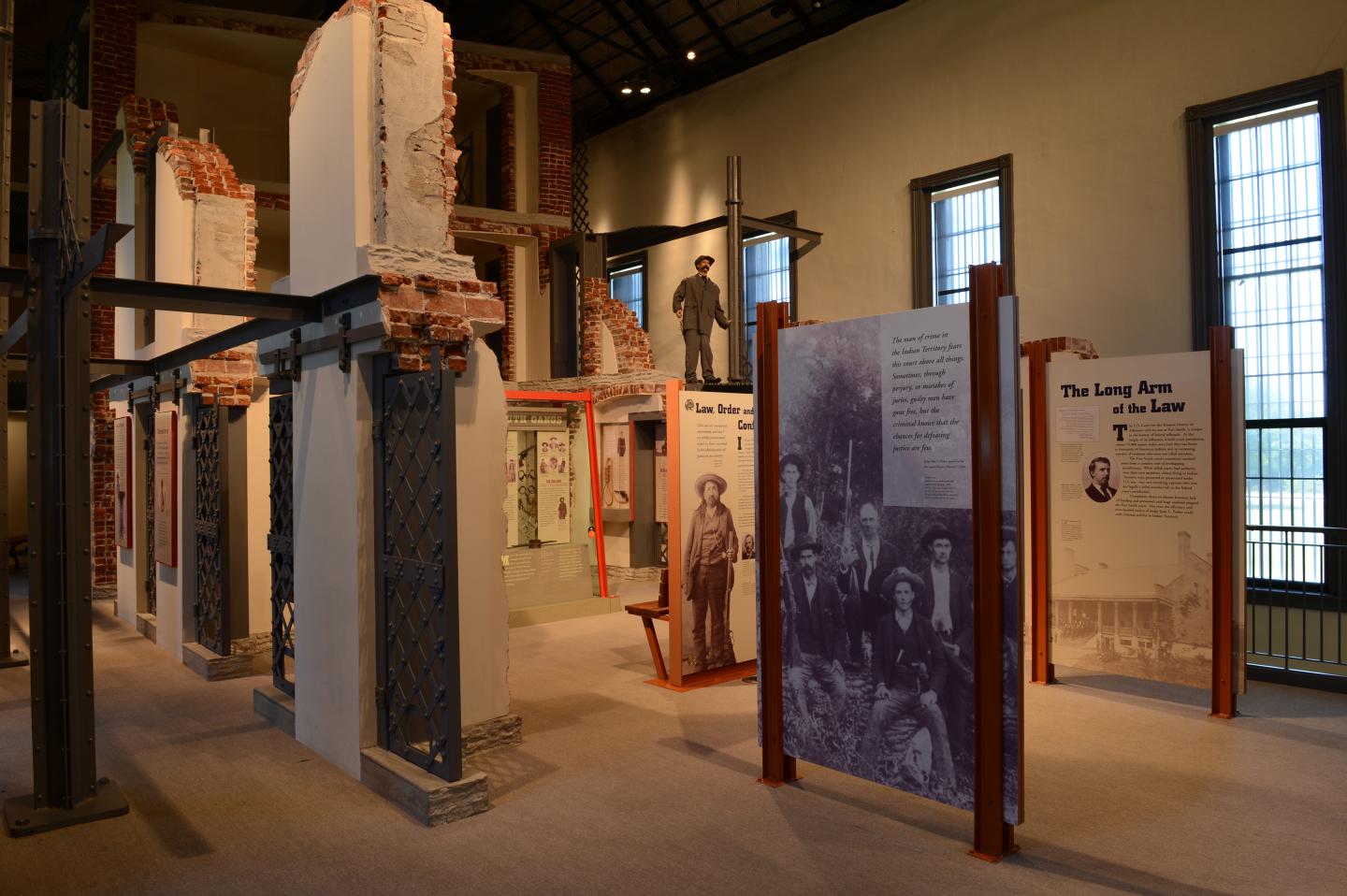
The National Historic Site commemorates a significant phase of America’s Westward expansion and stands today as a reminder of 80 turbulent years in Federal Indian policy. It contains the remains of two frontier forts and the building that held the Federal Court for the Western District of Arkansas.
Tour Judge Parker's courtroom, a re-creation of the 1886 gallows, and the jail once known as "Hell on the Border." Exhibits cover the army post (1817-1871), the Trail of Tears, the deputy marshals and outlaws who passed through the federal court, and references to the True Grit book and movie.
Walk out to Belle Point, where the first fort stood at the confluence of the Arkansas and Poteau rivers, and it's not hard to picture Ross riding her horse along the bank.
Adding to these true stories of true grit is the U.S. Marshals Museum, just minutes away and also on the riverbank.
U.S. Marshals Museum
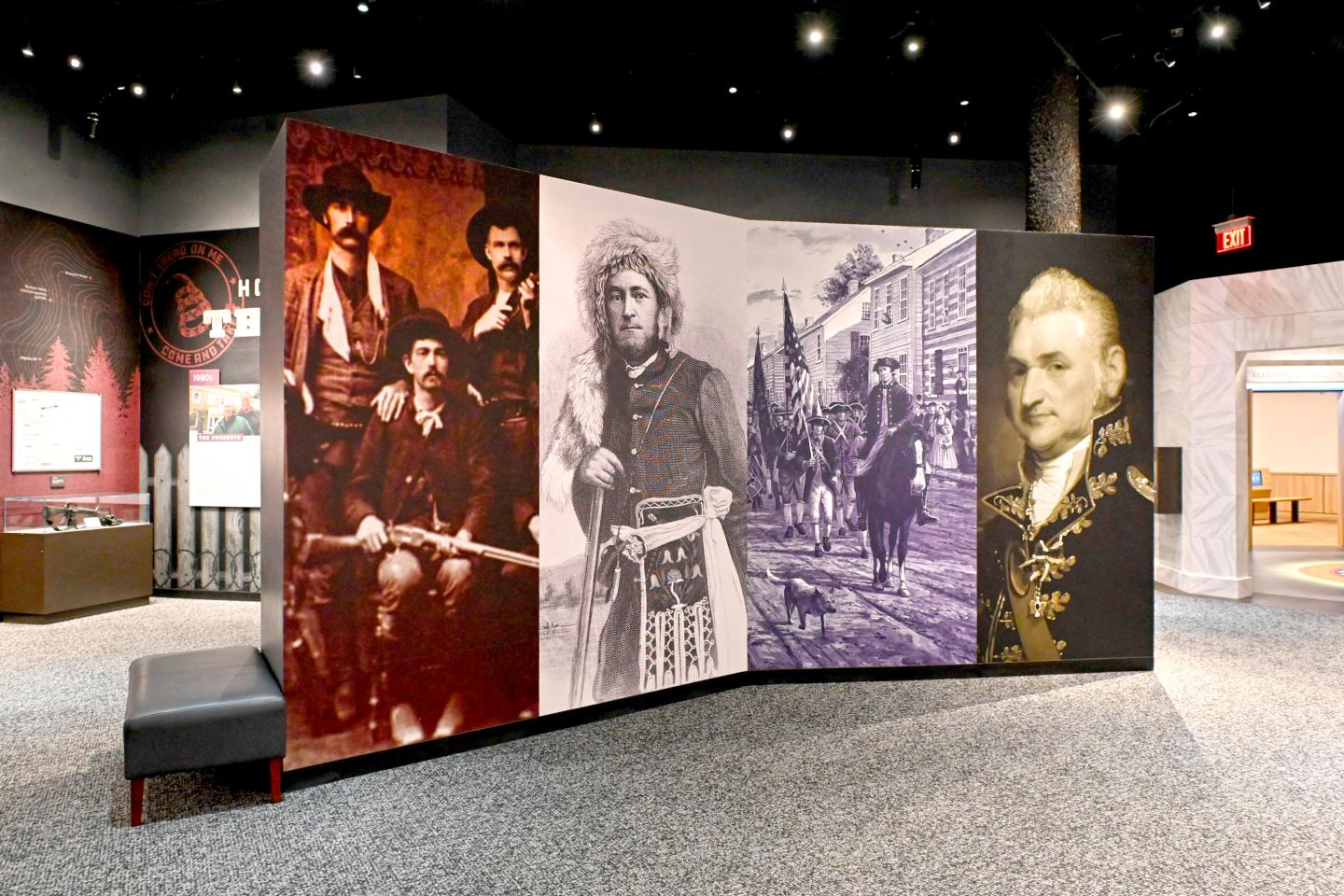
The U.S. Marshals Service is the oldest American federal law enforcement agency, created in 1789 by President George Washington. Since then, U.S. Marshals have worked daily to safeguard the nation’s streets and federal courts.
The history of the U.S. Marshals Service tells not only the story of law enforcement but also highlights the U.S. Constitution, the Bill of Rights, civil liberties, and patriotism.
The 53,000-square-foot museum exterior takes the modified shape of a star, echoing the badge worn by U.S. Marshals. Inside, five immersive galleries educate guests about the critical, ever-evolving role the Marshals have played in upholding the Rule of Law, driven by justice, integrity and service. The museum also honors the sacrifice of more than 350 Marshals killed in the line of duty since 1789 in the Samuel M. Sicard Hall of Honor.
This museum adds a national element to the city's already vibrant Wild West history.
Fort Smith
Fort Smith pays homage to U.S. Deputy Marshal Bass Reeves with an impressive 25-foot statue and has many other historic sites commemorating the Trail of Tears, the Civil War and the Butterfield Overland Mail Company route, now part of the Arkansas Heritage Trails System.
This colorful American backdrop is why True West magazine selected Fort Smith as the Top True Western Town in 2013. The city has been named in the top ten for numerous years.
Located on the Arkansas-Oklahoma border and near the junction of Interstates 40 and 49, Fort Smith is five miles from Van Buren, 47 miles from Arkansas wine country and 63 miles from Fayetteville.
How the Trail Was Established
House Bill 1628, signed by Gov. Asa Hutchinson, renamed a portion of Ark. 22 between Dardanelle and Fort Smith in honor of the 1968 novel and later films of the same name. It carried in the House by Rep. Mary Bentley, R-Perryville, and in the Senate by Sen. Gary Stubblefield, R-Branch, and was approved March 6 in the House by a 94-0 vote and on March 12 in the Senate with a 35-0 vote.
Appearing at the ceremonial signing of the bill with Gov. Hutchinson was John T. Wayne of Paragould, the grandson of the late John Wayne.